If Beyoncé weren’t so hugely popular, how popular would her songs be?
I only ask because Beyoncé’s music has rarely resonated with me. Not because I think it’s no good; it’s just that for the past 15 years or so, I’ll see a new Beyoncé single has been released (usually at or near the top of many charts), give it a listen, put it away and never come back to it. Then, I watch it climb the charts with literally nobody I know talking about it and nobody requesting me to play it at the club, only to be heard of again when I read some mainstream journalism outfit (I was a longtime subscriber of Entertainment Weekly, for example) or when Grammy season rolls around, where she’s always at least in the conversation, and usually winning awards.
Why is that? What is it between Beyoncé and I that’s caused such a disconnect? And even though it’s taken a few listens, why has her latest hit, “Cuff It,” resonated better with me?
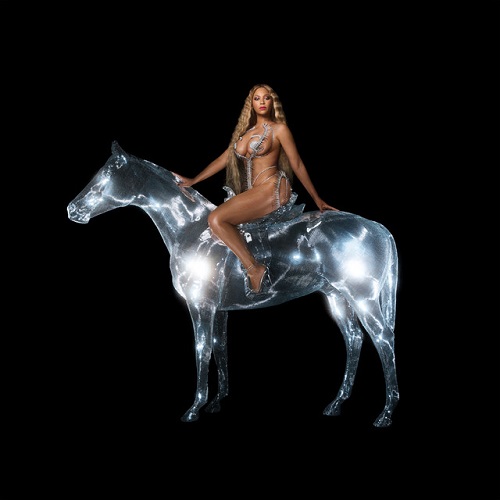
It’s probably because I’m getting old, and now that she’s in her early forties, Beyoncé isn’t too far behind me.
Released as the second single from Beyoncé’s 2022 album Renaissance, “Cuff It” is a catchy mix of funk and disco, the kind of track we lovers of ’70s and ’80s pop love (that’s what we grew up with, right?). And when I looked at the track’s writing credits, I saw exactly why my ears perked up. Remember Tony! Toni! Toné!, the R&B group popular in the early ’90s? Raphael Saadiq was a member, and he’s one of the writers on “Cuff It.” Remember the ’70s disco band Chic? One of my favorites, Nile Rodgers, is a founding member, and he’s also a writer on “Cuff It.” Rodgers is also behind some of the biggest albums and singles of the 1980s, including from David Bowie (“Let’s Dance”), Madonna (“Like a Virgin”), and Duran Duran (the remixed version of “The Reflex,” which went to No. 1 in both the UK and US). In fact, the chicken-scratch guitars and funk-bass make “Cuff It” sound like it could have easily been a track from Duran Duran’s 1986 album Notorious (also produced by Niles).
I’ve been pushing it on my audience at the mainstream club I DJ at (which continues to morph more and more into an “open format” club as technology further blurs the lines between genre and listening taste), slowly moving it later into the night and closer to prime dance hours, and the lyrics are classic, old-school club lyrics: “I feel like fallin’ in love / I need some drink in my cup / I’m in the mood to f*ck somethin’ up…” It’s a classic mix of love (relationships), partying (drinking), and fighting (dancing) – all of which you can take care of with a night at the club.
When thinking about the history of Beyoncé, the version we average folks remember is that she was the “main star” of Destiny’s Child, eventually breaking free of the girl group that introduced her to us. But amazingly, the story began way before that – in 1990 – when she was a member of the group Girl’s Tyme, an early version of Destiny’s Child, when she was just 8 or 9 years old. The Houston-based group gained some early notice, and at age 12, Beyoncé and Girl’s Tyme performed on Star Search in 1993 (check it out on YouTube), finishing second in the episode. It’s easy to see that Beyoncé, wearing neon green over baggy beach shorts, was talented and charismatic even back then, setting the stage for things to come. After some line-up tweaks, Girl’s Tyme signed in 1997 and changed their name to Destiny’s Child.
During a hiatus in 2003, Beyoncé released her debut solo album Dangerously in Love, which spawned the No. 1 hits “Crazy in Love” (featuring future hubby Jay-Z), “Baby Boy,” and top-five singles “Me, Myself and I” and “Naughty Girl.” These are the Beyoncé bangers I remember (along with 2008’s “Single Ladies [Put a Ring on It],” which can never not be played at a wedding reception during the flower toss). These are the songs that come to mind when I think of Beyoncé. But in the 20 years since Dangerously in Love and the 15 since I Am… Sasha Fierce (which spawned “Single Ladies,” and I also liked “Sweet Dreams”), nearly all of Beyoncé’s music passed by completely off my radar while simultaneously being touted as the best music ever by much of the music press. Usually when that happens, when an artist doesn’t personally resonate with me, I’ll be forced to confront it by my club audience via constant requests and their telling me how much they love it. But with Beyoncé? Nada.
“Cuff It” peaked at No. 6 on the Billboard Hot 100, a drop in fortunes from Renaissance‘s lead single, “Break My Soul,” which charted at No. 1 (her first No. 1 as a solo artist since “Single Ladies”), proving once again that my taste doesn’t quite align with that of the average listener (I didn’t give “Break My Soul” a second listen and forgot about it, but I’m game to revisit it).
When Beyoncé’s unmistakable voice belts out, “Go where nobody’s been / Have you ever had fun like this,” it reminds me of nights out clubbing because it was the only place to find other humans who felt the same, the only place to find that temporary interaction, the only place to escape, even if it was only for a few hours. There were no social media companies, no cell phones (and if you had a cell phone, it didn’t have a camera, and it wasn’t connected to a social media app). We had the Internet in 2003, but you couldn’t take it into the club in your pocket, forever pulling your attention away from the human connections we experienced before we glued our faces to screens instead.
Beyoncé has somehow stayed off my critical and personal radar for almost two decades, but now that we’re both in our forties, she resonates with me more, and I’m paying more attention.

